Showing posts with label Buick. Show all posts

Thursday, July 9, 2020


General Motors, Decline and Fall,
1980 – 2009

William Sundwick

Founded in Flint, Michigan in 1908, the corporation that ushered in the automobile age in America and came to dominate the nation’s industrial economy by the 1970s, declared Chapter 11 bankruptcy just after celebrating its centennial.

What happened?

In 1980, journalist/folklorist Ed Cray published his history of that corporation, Chrome Colossus: General Motors and Its Times. GM then held a 46 per cent share of the domestic U.S. auto market. Cray notes it had been over 50 per cent in the early to mid-1960s, inviting threats of anti-trust action from Congress, amplifying anger at GM manufacturing decisions concerning safety and lethargic pursuit of emissions reduction. The Boards of Directors in those days were confident they could ride over these assaults. They were right -- so long as sales and employment were strong and stock valuation high. I certainly felt no insecurity growing up as a teenager in a Flint GM family!
But there was an unseen threat building, starting in the 1970s, which should have foretold a deepening challenge to GM’s place in the automotive market.

It came from Japan, with its much younger automobile industry looking toward export markets, not just in the U.S., but around the world. The first Toyotas and Datsuns appeared on the West Coast in the late 1950s. A curiosity at first with little penetration even in California. But that penetration grew and went nationwide by the mid-70s. GM management did recognize that there was something peculiarly competitive about Japanese manufacturing. They sought to learn more about it via partnership with Toyota. NUMMI (New United Motors Manufacturing, Inc.) was formed in the early ‘80s at a closed GM plant in Fremont, California (since sold to Tesla). It produced both Chevrolets and Toyotas side-by-side on the same assembly line.

But NUMMI failed to change “The General.” What General Motors couldn’t understand was that the secret of Japanese manufacturing, and growing preference of U.S. consumers, had nothing to do with efficiency of the machinery in the plant. It was not the “culture” of employees (the old GM workers were rehired in Fremont). Instead, it was mainly the culture of management. The Fremont plant was run differently from other GM assembly plants, following the Japanese model. But apparently, corporate management failed to notice a fundamentally different job design. Workers in Fremont rotated among many different jobs, rather than simply tightening the same bolt every day for an eight-hour shift on thousands of cars.

GM had advance warning of this problem from the wildcat strike at Lordstown, Ohio in the early ‘70s – where sabotage led to slowdowns and generally low production quality of the new “import killer” small car launched there, the Chevrolet Vega. Production rates were punishing, workers took it out on the product. Yet corporate management took no notice. After the “experiment” at NUMMI, Japanese style “relational management” never spread to other plants. The Vega’s design was considered flawed, too, not merely its manufacturing quality. General Motors could not see its employees as anything more than cost centers, whether hourly and salaried engineers. The public could see the effects.

“Corporate culture” has become a popular trope over the last thirty years. It probably had its origin in the sad story of General Motors’ decline. The corporation had its beginning in the early days of the automobile, in an environment analogous to how we thought of Silicon Valley in the 1980s. It was where entrepreneurial ventures based on engineering advances were the foundation of economic growth. Billy Durant, the founder of the corporation, was the embodiment of that entrepreneurial, risk-all, American myth that surrounded figures like Steve Jobs in later times. Durant’s genius (some would call it recklessness) was his willingness to take a chance on a bevy of garage tinkerers he met in Michigan. The first of them was Flint mechanic David Buick, struggling with his own version of a horseless carriage. His Buick automobile was the brand that started General Motors. Durant, however, did not build the GM corporate culture. The myth of that industrial spirit was, instead, created by Alfred P. Sloan. Sloan led an ever more centralizing corporate Board through the 1920s and 1930s. The stable of brands assembled by Durant and his early associates had all been managed independently at the engineering and production level. They always had shared technology and parts, but Sloan made them mere “divisions,” subservient to the General Motors Board of Directors, directed jointly from Detroit and Wall Street. Sloan was the archetype modern corporatist.


Sloan organized the corporation around profit centers and marketing concepts. Any original ideas for products or engineering had to clear rigorous financial hoops – the “bean counters.” The overwhelming strength of the industrial engine this strategy created caused General Motors to be perceived as a key factor for allied victory when World War II came. Its then-president, William S. Knudsen, became FDR’s head of the War Production Board.

But, after the war, that old, inherently conservative, midwestern corporate culture returned -- unable to focus its marketing on anything but the ego-enhancing product differentiation that Sloan had pioneered starting in the 1920s. The five automotive brands that GM successfully hawked during the postwar years (Chevrolet, Pontiac, Buick, Oldsmobile, and Cadillac) were distinguished mostly by size and flash – what would today be called “bling.” All were built on a similar platform with more engineering in common than unique. Chevrolets and Cadillacs were built during the period to be fundamentally the same, different enough only to make a convincing argument that the higher-priced brand was somehow “better.” This was, of course, illusion – manufacturing standards and quality control were identical at all GM plants.

GM corporate culture could not grasp the reason for the increasing success of Japanese imports through the 1970s and ‘80s. It was not their cars’ designs, but a combination of several factors. There was the above-mentioned relational style of management in plants (and with suppliers); the uncomfortable fact that legacy costs were low at the much younger Japanese firms (not as many retirees collecting pensions and benefits); and, yes, a less risk-averse product-planning style, greater willingness to take chances on new designs without the relentless bottom-line calculations, the Wall Street side, that dominated GM decision-making. It was the old company, Toyota the young company!

When the UAW chose to strike General Motors in 2007, the walkout lasted three days. But three days lost production was not enough to change GM’s ways. Market share in the U.S. by then was down to only 20 per cent, a far cry from thirty years earlier. The public had caught on, even if management had not. GM was a global enterprise, but European market share was declining as well, and China was just getting started. South American (primarily Brazilian) operations were significant, but not on the scale of North American or European. When Wall Street was hit by the 2008 crash, the General finally took off his stars and filed for Chapter 11 bankruptcy in 2009, the corporation’s 101st anniversary. Only a massive U.S. government bailout saved GM from liquidation.

Arising from the ashes, the “new” General Motors, General Motors Company, LLC, promised to be leaner and better – not necessarily meaner. But global market share, even after selling off subsidiaries, and shuttering brands (Hummer, Opel, Pontiac, Saab, Saturn, others), has not revived over the ensuing decade. By 2019, U.S. market share had eroded even further, to about 17 per cent. Had the General learned anything?

CEO Mary Barra has flirted with new products, especially electric vehicles, and claims the company will transition completely to EVs (well, 70 per cent by 2040), but we’ll see. The plug-in hybrid Chevy Volt was discontinued in 2019, with no replacement named. Lordstown, site of the painful wildcat strike decades earlier, was not reconfigured, but closed – then sold to a start-up who will manufacture all-electric pickup trucks there soon. Will the GM Cruise Division, formed to manufacture autonomous vehicles at its Hamtramck plant, ever see the light of day?

If I were a prudent investor, I would not buy GM stock.


Thursday, May 9, 2019


Next Step in Car Shopping

Advance to the Test Drive?

William Sundwick

This year’s Washington Auto Show was in April. Held later than last year, it began to push into 2020 model year marketing territory. Nevertheless, it provided a useful opportunity to further explore the 15 vehicles that had found a place in my Crossover Shopping spreadsheet for 2019. They were all there, under one big roof at the Walter Washington Convention Center.

Indeed, planning our Friday evening outing to the show forced a decision: which stands to visit among the 15 contestants? My boredom with the process, after three years, made it easy to cancel two manufacturers from our schedule, and my wife readily agreed; we wouldn’t bother with Hyundai or Mitsubishi.

That still left a heavy burden of covering seven other stands on two floors in less than four hours before the show closed at 10:00 P.M. (We literally forgot one important display, Nissan, despite our intentions).

What we learned from this year’s show allowed us to reduce our 15 original entrants to five finalists. Each of the five comes from a different manufacturer, so advancing to the test drive, step four of my systematic process of shopping for a new car, would require some time – visiting five different dealerships.

First, the eliminations from the original list of 15 – Hyundai primarily because the Santa Fe, although new for 2019, struggles to match competitors’ fuel economy ratings, and has nothing else to set it apart from them. Mitsubishi, I feel, is still a questionable investment for the future, with reviews panning its quality and reliability. Beyond those two makes, which didn’t even warrant our attention at the show, those we saw also allowed us to eliminate more.

Scratch everything from GM – Buick, Chevrolet, and GMC – mostly due to brand image for Buick and GMC (my wife is sensitive to what sits in our driveway, no trucks, no stodgy Buick), and size/style for the Chevy Equinox (it squeaks in on the low end of my threshold for cargo volume).

Going for style is probably shallow in a new car purchase, but two eliminations were primarily due to styling. Both the Equinox and new Toyota RAV4 were, in comparison to competitors, well … ugly! The Equinox’s bustled rear quarter combined with squarish roof line just rubbed me the wrong way, reminding me of a pop-up camper. And, the RAV4, while entirely new from last year, looks like (wait for it!) a Toyota. The previous generation RAV4 had a
pleasant appearance much like its hot-selling competitors, not so this new version. Often, over the years, Toyota styling has been disturbing, very angular, depending more than others on frivolous details and faux-aggressiveness – the new RAV4 fits that unfortunate mold perfectly. It also seemed to have a cheaper interior, practical perhaps, but lacking the upscale feel of many competitors.

I also had no problem eliminating some of the larger contenders. After seeing them at the show, both my wife and I decided we could do without the Ford Edge or Subaru Outback. Yes, they’re bigger than the Escape and Forester, respectively, but the Edge is significantly more expensive than the Escape for that extra room, and Outback comes in a bigger package than Forester, but with virtually the same cargo volume!


VW’s models went in the other direction. The eliminated entrant was the smaller Golf AllTrack wagon -- like Equinox, possibly too small. And, it’s certain to be discontinued (along with all Golf wagons) for 2020. Besides, the larger Tiguan seems to sell for about the same price.

Due to my inadvertent snub of Nissan, and difficulty in eliminating something I didn’t see, the five finalists have now become:
  •        Ford Escape (carry over for 2019, all new next year)
  •          Honda CR-V (solid contender, as always) 
  •          Nissan Rogue (can’t eliminate, although nothing exceptional save Hybrid fuel economy)
  •          Subaru Forester (very impressive new body, almost indistinguishable from last year – “don’t mess with success”)
  •          Volkswagen Tiguan (cars were locked in display! But, peering
    through windows and looking at stickers resulted in a thumbs-up)

Stickers on all five finalists are in the same ball park for comparably equipped models. But the Auto Show cannot convey any sense of drivability. Performance, handling, visibility can only be judged after a test drive at a dealership. These days, the usability of electronics, infotainment systems, safety features also can only be explored in a test drive.

Therefore, the test drive is the next step. It won’t happen until after the June visit of in-laws from California, however. My wife must be fully involved, and she is now concerned primarily with her sister and brother-in-law’s visit. Maybe we’ll take them along?

If it waits too late into the summer, we may be pushing up against the 2020 model year – resetting the cycle back to spreadsheet updates and research. There are multiple dealerships in Northern Virginia we might visit. For close-in Arlington, Falls Church, and Alexandria there is Koons, Jerry’s, and Ourisman Ford; Bill Page, Brown, and Landmark Honda; Passport Nissan; Beyer Subaru; and Alexandria VW. Tysons contributes Priority Nissan, Stohlman Subaru and VW. If we choose Fairfax or Springfield, we can hit Sheehy or Ted Britt Ford, Brown or Priority Nissan, Farrish or Sheehy Subaru, and Fairfax or Sheehy VW.


It’s not likely that we’ll need to drive more than one version of each of the five finalists – we’re not looking for any unusual combination of equipment, except possibly a Hybrid Rogue. So, choosing a map direction and hitting all the dealers in that vicinity might work. But it likely would require more than one afternoon, we could go twice or three times.

Is there an easier way to make our decision? The drive is the thing, it seems. Choices of color and equipment are reasonably uniform among all. Both my wife and I will be drivers, and both of us will be passengers. There will be one or two car seats in the rear. The driver will evaluate instrumentation, performance and handling, while the passenger evaluates electronics, general comfort, climate controls, and interior detailing. Only a test drive can afford this opportunity.

Since we intend to keep this car for more than ten years – as has been our habit for the last thirty years -- the answer to the question, “is there an easier way?” is emphatically no!


Sunday, March 31, 2019


Quest for the Perfect Car

Five Step Process for Car Shopping

William Sundwick

We buy a car approximately every five-to-seven years. In a two-car family, that means cars generally sit in our driveway for a minimum of 11 years. Maybe as many as 15 years.

So, car shopping is a big deal. It happens rarely and amounts to a major life event. Typically, it is attenuated over two or three years.

In my family, I play the role of car buff and market analyst. My wife takes the role of sensible consumer making a sizable investment in our future. Thus, we are now involved in year two of our quest for the perfect replacement for our 2007 Toyota Highlander Hybrid.

The old car still has some miles left in it (~86,000 now), so this quest could continue longer. But we both feel it is time to start thinking of a successor. We have visions of ever higher repair costs, and many small, unsightly dings and scrapes are now marring a body we no longer think deserves body shop treatment. The fabric interior is stained with accumulated grime and wear. We replaced a windshield at Safelite a few years ago with an inferior-spec non-polarized version.

Any new car we buy will have an updated audio system, with infotainment, more active safety measures, and heated leather seating. All constituting a significant upgrade – not to mention that it WILL BE NEW!

But, will we lose anything? To ensure that we don’t, I have created a spreadsheet (2019 is its third model year tab) detailing specs and review notes from the automotive press on all possible replacement candidates in the hottest segment of the auto market – compact two-row crossover/SUVs. This is the segment inhabited back in 2007 by our Highlander, and it is even more popular now, with more competitors.

There are 15 possible choices for the 2019 model year (down from 2018 and 2017 because of more stringent filtering). The threshold filters this year are measures of fuel economy, cargo volume, and price for the lowest acceptable level of equipment, based on manufacturers’ online “build-and-price” sites. Fuel economy must reach a minimum of 27 mpg highway by EPA estimate. Cargo volume with rear seat folded must exceed 63 cu. ft. And, pricing for what I’ve defined as “level 1” trim must be less than $40,000. Level 1 (as opposed to “level 2,” which is fully-equipped top-end trim) includes power driver’s seat, touch screen infotainment system, some active safety features (e.g., front collision warning, lane-change warning, active cruise control), and a rear cargo cover and storage net. These things make the car equivalent or superior to my 2007 Highlander.

The filtering has been refined over the last two years. We’re older now, more spoiled by amenities (preferring something closer to “level 2” trim), and our cargo carrying requirements may have diminished somewhat. Now we look at things like easy-to-find LATCH anchors for child car seats (grandchildren!), competitive price, and the newest active safety features unknown in the days of our ’07 Highlander.


Step One of our five step shopping process was to assess our current needs. It’s looking like we’ll go for a fancier, smaller, more economical vehicle with comfortable accommodation for growing families. But a big tax bill this year and Trump’s threatened tariffs on imported cars make us wary of purchase price, too. We have completed Step One.

Step Two was the follow-up. We looked at the market. What were the choices? This is where my “crossover shopping” spreadsheet became the tool. The 15 vehicles this year from Ford, GM, Honda, Hyundai, Mitsubishi, Nissan, Subaru, Toyota, and Volkswagen all meet my threshold requirements (which have changed each year). Each contender has certain strengths and weaknesses; the best in class fuel economy goes to the Mitsubishi Outlander PHEV, next best is the Toyota RAV4 Hybrid. Roomiest is also the Outlander (PHEV version), next roomiest is the new Subaru Forester. Lowest price for comparably equipped models, Ford Escape (unfortunately, made in Mexico, may be subject to those tariffs); next lowest, Honda CR-V (more domestic content than Ford!). Active safety features like blind spot monitoring, active cruise control, and automatic emergency braking are options on many entrants in this segment, but standard across the line on Honda CR-V, Nissan Rogue, and both Subarus, Forester and Outback. We are now poised to begin Step Three.

This step will determine which trade-offs are worthwhile. We may sacrifice less important things, like power passenger seat, or faster 0-60 mph acceleration (measured in tenths of a second). But things like accessibility of LATCH anchors may be more important – or the angle of opening for rear doors (there is variability here). Much of this detail information can be found in reviews, such as Car & Driver blog, or Edmunds, and are reflected in my spreadsheet. We will then visit dealerships (and the annual Washington Auto Show). Look and feel of the contenders will become the most important factor, things like dash layout, interior materials quality and finish, styling. 

Step Four will narrow the field to test-drive candidates. We will not test drive all 15 entries in the spreadsheet. We may not even visit dealerships representing all the manufacturers. Hyundai has relatively poor EPA ratings, whereas Mitsubishi and Toyota are at the top there, but lack other features -- reliability for Mitsubishi, rear seat passenger accessibility for Toyota RAV4.

The final decision constitutes Step Five. It will be made from a combination of impressions garnered in the first four steps. And, it may well be that the clincher is the personal touch from the salesperson at a specific dealership. Our last car purchase – a Chevy Volt – was ultimately decided based on the incredible knowledge of PHEV Voltec engineering, combined with personal charm, of the salesman we dealt with at Koons GM Corner Tysons (one Mark Gomez).

Other decisive factors include a business assessment of the manufacturer -- how long will Mitsubishi survive in U.S. market? How about ethics at VW or GM? (Scandals have affected both companies recently). The design of the manufacturer’s cars also conveys how badly they want me as a customer. In GM’s favor, they have three vehicles that meet all the requirements to be included in my spreadsheet, no other manufacturer has more than two. My wife has a much stronger aesthetic/social appreciation for what she wants in our driveway. That, more than strategic financial concerns, is why we have eliminated all the “luxury” brands from our potential candidates. Similarly, brand images might narrow the GM entrants to one – Chevy Equinox (eliminating both Buick and GMC). But that would mean two Chevrolets in our driveway. (What is this? Flint, Michigan, ca. 1965?)

Not a trivial matter, this final decision. It’s a car we may keep until we cease driving. The last car we own? What a weighty thought!


Thursday, September 27, 2018


Arrival and Insertion, 1953-62

The Flint Series, Chapter 3

William Sundwick

Flint grew rapidly in the early fifties. The 1950 Census pegged its population at about 163-thousand, but by 1960 it was 197-thousand. We all noticed it.

New neighborhoods, like our Ballenger Highway neighborhood, were adding single family houses, in ours mostly “ranch-style” (often called “ramblers” on the East Coast), at such a rate that services couldn’t keep up.

Schools needed to be expanded quickly. Since the nearest elementary school to us was over a mile away (no buses), four hastily erected prefab “primary units” for grades K-3 served as a stopgap.  These one room units, identical except for paint color, were in use until we moved out in 1965, when the new Anderson Elementary School finally opened in the neighborhood.

Henry Wadsworth Longfellow Elementary/Junior High School had been built on Chevrolet Avenue in 1928, only a few blocks north of the old “Chevy in the Hole” complex. This was the original dedicated Chevrolet and Buick assembly location, built in the teens. From 4th grade on, I was deemed capable of walking safely the short mile from my house to the school.

It was a pleasant enough walk, except in winter when Flint became frozen tundra for four months.  I seldom had to walk alone, always accompanied by chums in my grade. It was a friendly neighborhood, with many kids my age.

We strolled down Winona Street four blocks to Mackin Road, then east on Mackin another five blocks. It was a big school compared to those one-room prefab primary units. There was a spacious playground, a gym, and a library.

My friends included Abe, who lived on Mackin Road – I stopped at his house each morning to pick him up, and we walked together. He was the elder son of Holocaust survivors who had somehow found themselves in Flint, moving from New York (Brooklyn?) a couple years earlier.

There was also Charles. He walked from his house on Begole Street a block away, and we would proceed from there. Some tensions arose later with Charles, as our world views took on shades of plant management. His dad was my father’s subordinate at Ternstedt.


My cousin John Sundwick, the youngest of my Uncle Bob’s three kids, was a year behind me in school, and lived only about four blocks away on Lavender Street; but, alas, our Elementary School paths never crossed, since school districts in Flint placed the boundary between Civic Park Elementary and Longfellow between us. Ballenger Highway was an insurmountable barrier to walking without crossing guards or lights, for kids our age. In Junior High, defined as grades 7-9, the “other Flint Sundwicks” lived in Florida, returning later to the Flint area.

In those frigid winter months, or on any rainy days, I remember rides proffered only by my own mother. Other moms didn’t seem to step up. Did they not have access to a car? In Flint? That’s possible, since there might not have been many two-car families in our predominantly working-class neighborhoods. Mom’s 1953 Chevy did yeoman’s service for seven years.

Michael Moore, in his memoir about growing up in Flint, “Here Comes Trouble” (2011), declared mid-century industrial Flint a relatively classless society. He wrote of living on the same block with doctors and lawyers, even though his own father was an hourly-rate assembly line worker at AC Spark Plug .  The same was true in my Ballenger Highway neighborhood – indeed, except for my own closest friends, I had no idea what people’s dads (and moms) did for a living. It was never a topic of conversation. And, even somebody as class-conscious as my mother, who put much effort into “social climbing” (allegedly for my dad’s career), would never say an unkind word about any of our neighbors, their income, education, or social status.

I learned later, in high school, that the Ternstedt people, except my friend Charles’ family, were ensconced in wealthier neighborhoods in town.

As the sixties arrived, our neighborhood was completed. The newest houses were somewhat larger and fancier than the originals like ours. Split levels appeared in the late fifties. And we learned that some people moving into them were part of a “professional” class, self-employed (especially doctors, tax accountants, funeral directors) – not necessarily reliant on General Motors for employment.

This change may have separated our neighborhood from the adjoining old Civic Park neighborhood, which was expressly built by GM for its workers in the teens and twenties. Despite the abandoned houses, vacant lots, and ghostly shell of an empty Haskell Community Center, a historical marker at Bassett Park, its former centerpiece, still stands to recognize this. Civic Park epitomizes the “old” Flint better than any other neighborhoods on the west side of town. It may symbolize the death of the city as well.

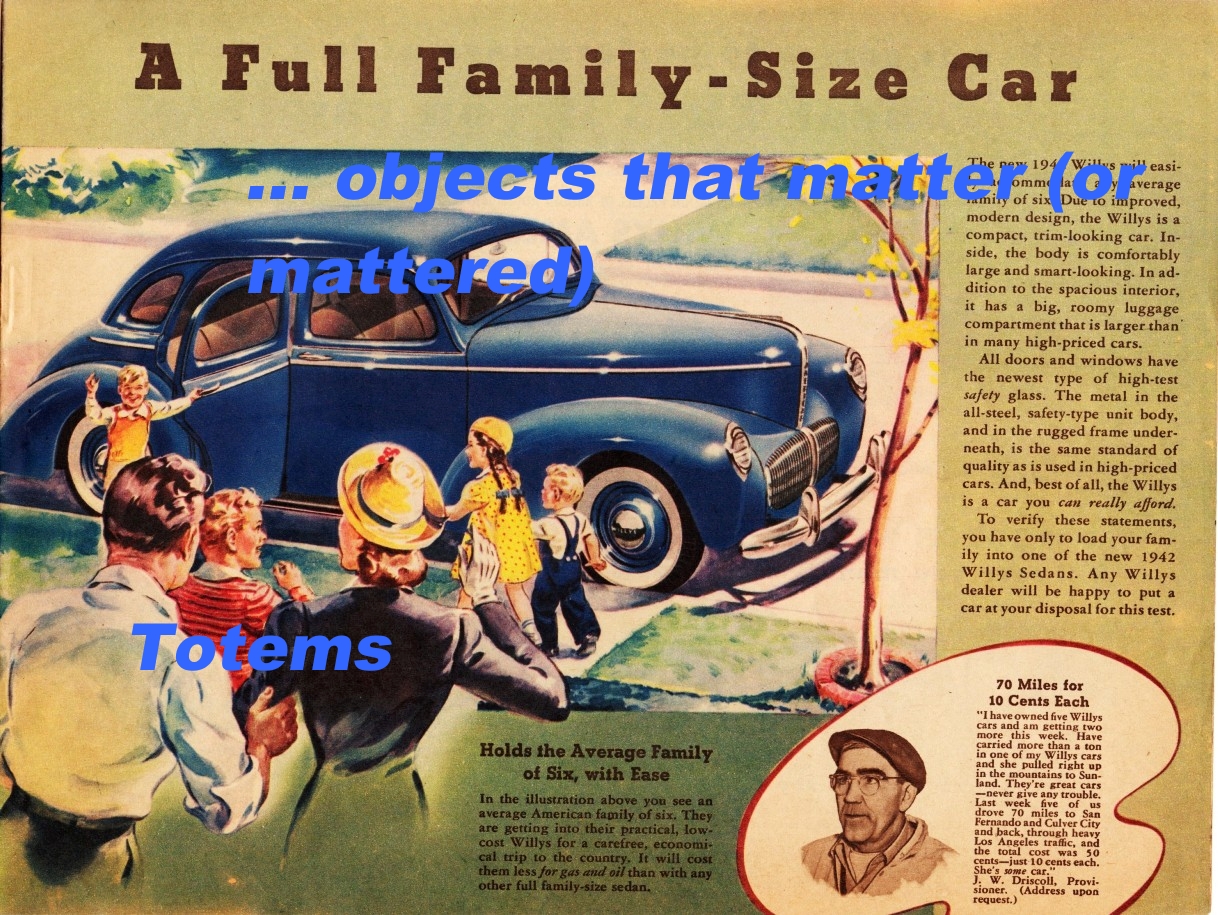
 I always noticed what kind of cars were in my neighbors’ driveways. Back then, people changed cars frequently, typically every two years. They all had a sense of loyalty to Mother GM, apparently reasoning they could secure their own paychecks by buying its cars. Almost always Buicks and Chevrolets, the specific model, equipment, etc. waxed large in my observation. But we were the only folks in the neighborhood with a new Cadillac every year, from 1954-1958, until Dad’s career flatlined after his first coronary. We immediately switched to Chevy.

We did have two cars still, and a garage for them. Did the neighbors talk, when my dad courageously switched to the lowest-priced “stripped down” Chevy in 1958? My mom was embarrassed, and she told us as much! I had grown fond of the Cadillacs, too, but looking back I now understand my dad’s rather powerful social statement. Why did we care, really, about the Caddies? Did it matter what the neighbors thought?

My world changed when I entered Flint Central High School for the 1962-63 school year. It was the Harvard of Flint public high schools, the oldest (1923), situated near the Flint College and Cultural Center. And, all I had to do to get there was live in its district, which included a narrow swath on the west side of town (perhaps drawn for racial gerrymandering or integration?). It also included the “East Village” neighborhood – home to Flint’s old money, and intellectual elite.

It was a new world, indeed. Eventually, it led to a strong desire to escape! 


Thursday, September 13, 2018


Flint: Lumber to Carriages to Cars

The Flint Series, Chapter 1

William Sundwick

 When I arrived in Flint, Michigan at age six, the city, incorporated in 1855, had already established itself: first as a hub for the central Michigan lumber industry, then earning the appellation “Vehicle City,” then as the manufacturing center of the largest auto maker in the world. To clarify, that nickname on the iconic iron arches over North Saginaw Street signified horse-drawn carriages. Flint had become the nation’s foremost manufacturer of such “vehicles” by 1900, thanks mostly to the Durant-Dort Carriage Company, and Flint Wagon Works. 


William C. Durant and J. Dallas Dort were the driving force behind the city’s growth in those years, capitalizing on an auspicious lumber trade across the natural fords of the Flint River, and onward south and east. The raw materials for wagons and carriages thus were readily available.

With the success of his carriage empire, Durant embraced risk. Some would call him a speculator. Both he and his partner, Dort, became eager to move into the nascent “horseless carriage” field.  They would need the right contacts for capital and mechanical ingenuity. Durant reached out to secure both. Investment capital came from New York, and he found ingenuity closer to home, in Detroit. Specifically, from David Dunbar Buick, who had tried building cars, but was less than successful as a businessman. Durant rescued him financially and moved production to Flint. Durant tirelessly promoted what was now his Buick automobile, made at the original Durant-Dort carriage factory in today’s “Carriage Town” – the oldest Flint neighborhood. His angle was safety, becoming a public concern in those early horseless carriage days. It worked. By 1909, Buick had become the best-selling car in the U.S. (outperforming Ford, Oldsmobile, and Cadillac).

The amazing success of Buick in those early years may have gone to Bill Durant’s head. He started negotiating with his Detroit and Wall Street contacts to purchase other car makers. Some of his carriage-making executives, like A.B.C. Hardy and Charles W. Nash, were also pushing hard for more internal combustion powered vehicles. General Motors Corporation was chartered in 1908. It was Durant and Dort’s baby. Corporate HQs were right next door to the Durant-Dort Carriage Works factory. Nash would leave Durant to form his own brand, Nash Motors, in 1917.  


GM continued to grow – not just in Flint, but also Detroit. And Canada, too, under a partnership with R.S. McLaughlin, who, like Durant, was the largest carriage maker in his country. Durant acquired Buick competitors Oldsmobile, Cadillac, and Oakland Motors. All these brands were retained, following Durant’s strategy to offer many different cars for different tastes at different price points.
Unfortunately, his next acquisition, Chevrolet, was not so successful at first.  The car was fine, but Durant’s holdings in Chevrolet were leveraged out of his control by partner McLaughlin -- Chevrolet briefly became a Canadian make. By the mid-teens, however, Durant had bought it back, and Chevrolet was pulled into the Buick orbit – made in Flint. But, by 1921, Durant was gone again, starting his own Durant Motors (in Flint) which survived until the crash of 1929, when Durant left the automobile business for good.

Despite the slowdown in automobile production during the Depression, Detroit and Flint saw huge numbers of immigrants from the Deep South (both black and white), as well as even more depressed areas in Northern Michigan. My uncle Bob was the latter. He married into a family with deep roots in the Flint area, although he was a new employee at the AC Spark Plug plant on the east edge of town. By the time I arrived in 1953, they were already the “Flint Sundwicks.”

Rapid population growth in an era of declining demand for its products caused serious social tensions in Flint. This tension led to the famous Sit-down Strikes of 1936-37, credited by many labor historians and the Left as the beginning of the modern union movement in the U.S. (which should now be called the “post-war industrial union movement of the 20th century,” since unions are in decline in the 21st century).

It’s easy for somebody who grew up in Flint during that post-war glimmer of labor prosperity and rising expectations to romanticize the place where it happened, as well as the times. Were the strikes started, or abetted, by communists? The historical record is vague on this – since many of the interviews with participants were collected during the McCarthy witch-hunting era. People involved, if connected to left organizations, were often reluctant to admit it. My own experience during high school in the sixties tended to foster a romantic view of communist agitators manning the barricades (in Flint’s case, guarding their machines) – they were my heroes, whether they really existed or not.

In my imagination, those strikes set the stage for the Flint that I knew. 


Wednesday, October 18, 2017

 What We Drove, and Why

One Family’s Car Culture, GM Style – 1950-1970

(Sundwick Automotive Photo Library, Part IV)

William Sundwick

We were not a typical family, even for Dearborn or Flint. Dad was a committed General Motors “lifer” – a salaried engineer, destined by the end of his career to be at the top rungs of “plant-level” management. We were required to own GM products; it was a moral responsibility.

And, we had to change them frequently – advertising, of sorts. The family corporate discount on new cars probably didn’t exceed 20%. So, my dad took a bath when he traded every year. Surely, his salary wouldn’t compensate for that. He felt he had the civic obligation to visibly promote the General’s products.

My earliest car memory dates from the summer I turned three. I have a distinct image imprinted in
my deepest consciousness, unsupported by a family photograph, but reinforced by my father when I described the scene as an adult. It’s an image of a sunny day, me walking out the kitchen door to see a new shiny green 1950 Chevrolet in the driveway. I remember the detail of the chrome grille and bumpers, I remember that it was a trunk-back “Styleline” two-door sedan (as opposed to the “Fleetline” fastback body style). Yes!” exclaimed my dad, “that was our ’50 Chevy!” Why do I remember it? Mysteries of early cognitive development, I guess.

Perhaps the reason it was not recorded in the family photo album is because it was not a particularly remarkable event. It was just another new car – even then, when Dad was a relatively junior engineer at the Detroit Ternstedt plant (GM’s “hardware” division), he traded cars every year. Each was indelibly recorded in my mind’s eye, even as they were just routine for my parents.

I remember our upgrade from Chevrolet to Oldsmobile in 1952. The rationale was that we were planning an ambitious road trip to the Rocky Mountains that summer. Dad felt he needed V8 power to climb the mountains in Wyoming, where we had plans to stay at a “dude ranch” there (a popular tourist destination in those days). That ’52 Olds 88 was the least expensive V8 in the GM line, a two-door sedan like the previous Chevys (no sporty “hardtops,” or even white sidewalls, for my father’s spartan taste).

Moving from Dearborn to Flint in the Summer of 1953, shortly after the F5 Beecher tornado laid waste to a big swath of the latter, I found myself in alien territory. It felt like the “frontier.” Our new construction house was in a development on the edge of town, lacking sidewalks or even paved streets at first. We packed our belongings into another spartan two-door, a 1953 Chevy “210” series. It was two-tone brown, and would be my mother’s car for an unprecedented seven years. In Flint, we needed two cars for the first time. My mom needed to get out into our new community. We had relatives there – but, Mom had bigger plans. She was going to college! The local junior college (now called Mott College) expanded to become the Flint branch of the University of Michigan.  She would be in its first graduating class, 1960. As a part-time student she needed a car. That ’53 Chevy was it for the duration, nearly six years.


Dad meanwhile was assuming increased responsibility at the new Ternstedt plant on Coldwater Road. It would join many other GM manufacturing centers around the city. There were Buick “city” on the North side, and old “Chevrolet No. 1” on Chevrolet Avenue (dating back to the very first Chevys, in the teens). Fisher Body No. 1, almost as old, and scene of the famous 1936-37 sit-down strikes which gave birth to the UAW, and the halcyon days of the American labor movement. There was AC Spark Plug on the eastern edge of town, where my uncle worked in sales (also the workplace of Flintoid Michael Moore’s father).

 But, GM was engaged in massive expansion in fifties Flint – in addition to Ternstedt, there was the Van Slyke Chevrolet complex, which doubled or tripled Chevrolet capacity over old No. 1. It included the legendary “V8 engine plant” – hallowed ground for American car buffs.

Flint was rapidly becoming a “real city” – at first, the explosive population growth seemed to have no limits, but eventually dark clouds began to gather. By high school my entire cohort vowed never to return to Flint after college. We thought it a city without a soul.

Climbing the GM corporate ladder – even at the plant level – required symbols of authority, so my
father bought a succession of five Cadillacs in the mid-fifties. Their main purpose was to park in his reserved space in the plant’s lot – “Mr. Sundwick, Process Engng.”  But, they were also comfortable fun for our annual summer road trips. We traveled to Wisconsin (Mom’s family), New England, the Upper Peninsula (more Sundwick relatives); and ultimately, California in 1958, the last Cadillac.

To emphasize the utilitarian nature of these otherwise ostentatious rides, Dad selected entry level “62 Coupes” – they had whitewall tires by this time, but little else. There were roll-up windows, no A/C, no automatic headlight dimmers on the dash. The one exception was a 1956 Sedan de Ville, a four-door “hardtop” with power windows and power seat. Still no air (it was Michigan, after all).

At age 49, Dad suffered a serious heart attack, in the fall of 1956. His career path was truncated, since he was now a health risk for the corporation. He accepted the lowered aspirations by figuratively raising his middle finger – no more Cadillacs after 1958 (though he claimed reliability problems with that ’58 disenchanted him). Indeed, we sold that last Caddy, and replaced it before the end of the model year with the very lowest priced, “stripped down” Chevy one could buy – a back-to-basics 1958 Delray two-door. He drove it to work and parked in that same reserved space. What did people think? My mother registered embarrassment at neighbors’ inquiries. I was mortified, too. In 6th grade, however, few classmates knew much of our family.


When we visited Washington, D.C. for our next summer road trip, we had already upgraded to a new ’59 Impala 4-door hardtop (called a “Sport Sedan”). And, it did have whitewalls! 


Frugality was becoming a theme in our family. College savings may have begun to weigh on my parents, despite Mom’s new job as a high school English teacher in Flint’s “suburbs.” We kept the ’59 Impala for another year, and a trip to New York. Finally, now that my mom was supplementing our income, we replaced her old ’53 Chevy -- with a funky little black Corvair sedan. This was a truly curious car. 1960 was the first year for Corvair, it had an air-cooled “pancake” rear engine like a VW! It did have white sidewalls. That low bar seems to have finally been crossed.


As I approached driver’s license age, both Mom and I wanted to recover some neighborhood social status. The result: my dad reluctantly agreed that our next car would be an Impala convertible – our only convertible ever! With my learner’s permit in the glovebox, it bothered me only slightly that it was my mom in the passenger seat when I tooled around the neighborhood with top down. The bright yellow ’61 had a white top, camel interior, and
not only whitewalls, but full wheel covers, rear antenna, and bumper guards! Yes, my dad was weakening. I even convinced him that power windows were a practical necessity with convertibles.

My dad drove the Corvair to work.

As the sixties progressed, we gradually moved up the GM product line again, but no more Cadillacs until my parents retired and moved to Florida following Dad’s second coronary. In 1962, it was another Olds, ten years after the previous example, then a Buick LeSabre, and a 1964 Pontiac Star Chief (our first car with air conditioning, despite summer road trip that year planned for Toronto and the New York World’s Fair). 


In 1965, we bought a truly sporty bright red Corvair Monza coupe with white vinyl interior (we were a two Corvair family for one year – Mom’s 1963 beige Monza was my high school choice for dates).
By the time I graduated from Flint Central High School in 1965, I had acquired a used 1956 Pontiac Chieftan 4-door hardtop, justified by my job as managing editor of “The Arrowhead,” the high school newspaper. I needed to zip around town during the day collecting advertising copy from local businesses. Mom needed her car for school in the “burbs.”


It was off to college in Kalamazoo the following fall. No car (not allowed for freshmen). My parents bought a pair of 1966 Buicks to celebrate my leaving. One for my dad (a stately Electra 225 sedan) and one for my mom (a midsize Skylark coupe). I enjoyed the Skylark when home on break – its
diminutive 300 cu. In. 2-bbl. V8 seemed surprisingly peppy (worth one speeding ticket).

That would be my final Flint fling, except I came back to visit Flint once as a college senior, with my girlfriend, in the graduation present from my parents -- a ’69 Opel Rallye Kadett (yellow with black bumblebee stripes and interior, flat black hood panels, husky 4-speed manual transmission, tachometer, and fairly potent 1.9- liter overhead cam four).


During their Florida retirement, the parents had drifted back to Cadillac. Coming full circle with a gold 1968 Coupe de Ville. It was huge. I drove it once or twice on errands. Giant 472 cu. In. V8, but I could hardly see the end of the hood in front of me when driving. I wondered if you could land aircraft on its deck!

For me, my parents’ life in Florida was increasingly remote. I moved to the Washington area in 1971 for grad school at College Park. I stayed here; they stayed there. Until I brought my mom up here, to a nursing home, when she was in the terminal stages of Parkinsons. She died here in 2007.

I have no recollection of driving any of their succession of Cadillacs and Buicks (there were several) after 1970. And, my choices in transportation were governed more by practicality than advertising or social status.