Showing posts with label politics. Show all posts

Sunday, June 28, 2020


Writer’s Block

Where Am I Going, Anyway?

William Sundwick

I can’t seem to focus these days. Is it Coronavirus quarantine fatigue? Or, is it a much deeper philosophical crisis? I must ask myself: what kept me going writing in Warp & Woof, for nearly three-and-a-half years, that is now missing?

The obvious answer: my Writers Group is missing. For all those years, I wrote under strict weekly deadlines (with breaks between sessions). Now there are no such deadlines. And, it doesn’t look like I can reconstitute the group in the near future. Not until in-person classes are again offered by Arlington Community Learning, anyway. Zoom classes do not allow the kind of feedback that was critical for my weekly production of posts and kept me going during breaks. I relied on the six to nine classmates and instructor reading my output – and I theirs. Each week they would give me spontaneous thoughts on my piece, as I did for their work, complete with notes written on print copies of the piece. It was a good system, at once conversational and well-prepared. It was Jerry Haines’ system.

But then Jerry left for health reasons. ACL tried to replace him but could not. I’ve been lost without him. Among other things, Jerry taught me to focus on my intended audience. Was that audience the Writers Group itself? Or, did I have a different, virtual, audience in mind? Friends and family? I promoted my blog via social media contacts and email, although I never paid for promotion.
Facebook discussion groups and chat rooms have fallen out of fashion these days, however. Do I need a different means of promotion? Do I need another ACL Writers Group?

And, I am beginning to question whether I have anything to say. Perhaps now is the time to re-evaluate the five basic themes on which Warp & Woof was built:

  1.    .       The Past – “What Used to Matter,” I labeled it. This is my page for all pieces covering politics, history, and sociology. It has by far the most posts, after three-plus years of writing since launching the blog. The page reflects what I read.
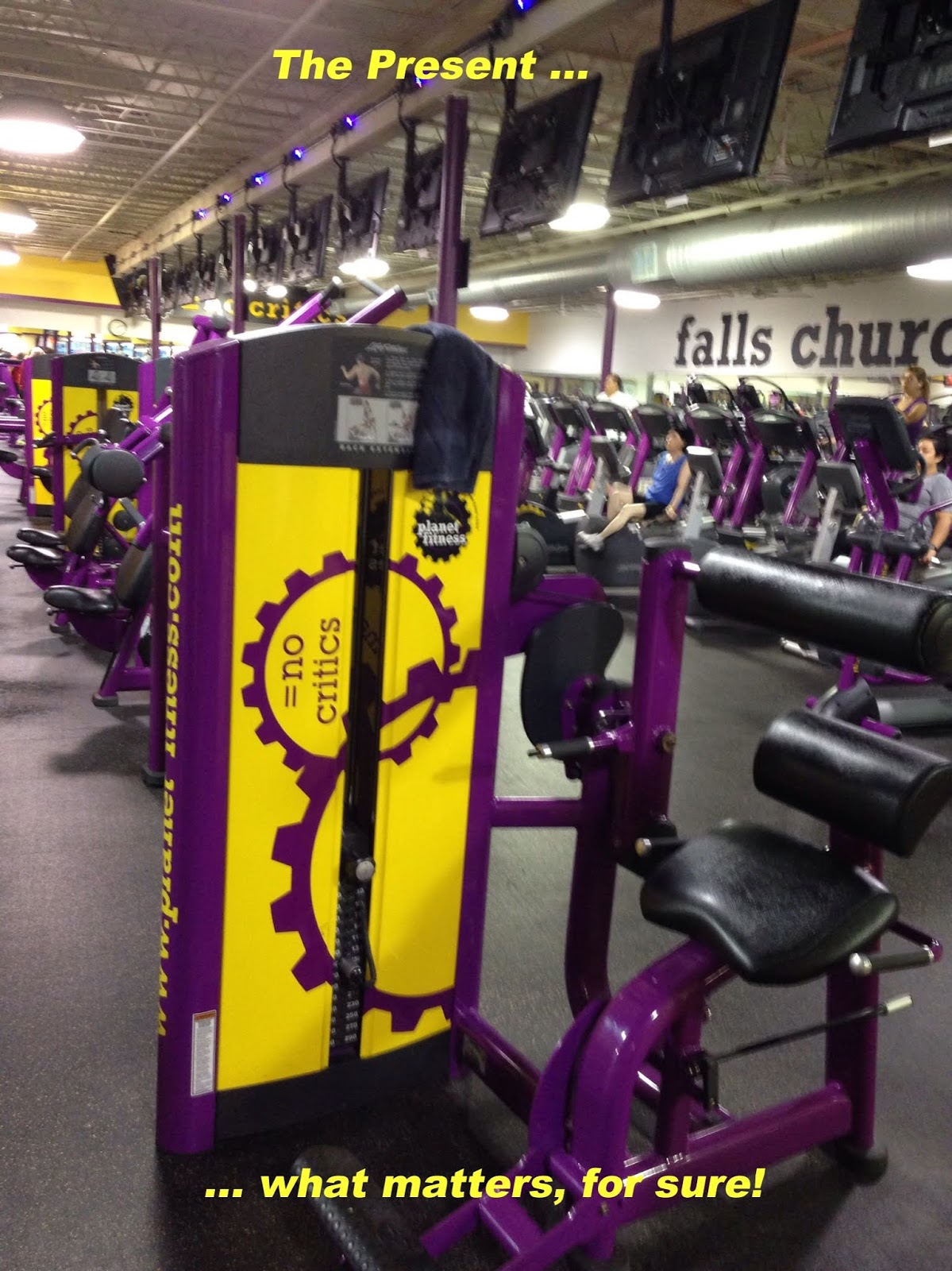
  2.       .    The Present – “What Matters for Sure.” It is the next biggest collection, where I have written about health and fitness, including mental health and my own life today, as well as several excursions into my grandchildren’s lives. Certainly, my family and friends appreciate this material, and the Writers Group often gave me positive feelings about these pieces, too.
  3.           The Future – “What May Matter, Who Knows?” This page is decidedly thin on original content. Its only noteworthy topics have been related to economics, placed here as projections or explorations of consumer behavior. Originally, I thought I would cover more science and technology on this page, and maybe anthropology (enduring elements of the human experience). Alas, these never materialized after the inaugural year of Warp & Woof. Is it time to retire The Future?
  4.            Beats – “Sounds that Matter,” as I tagged it in 2017. It is perhaps the most coherent of all my pages, except for The Past, but has recently suffered because I’m simply not listening to music during this pandemic lockdown. My gym has been closed! I would always crank up my iTunes playlist on my phone while working out – but I don’t workout anymore. Sad. Perhaps Beats will pick up again in the future. I still maintain an interest in classic rock, blues, and more avant-garde forms of rock (punk and metal). My music speaks to me. I should be able to put it into words.
  5.            Totems – “Objects that Matter,” was really about car culture – something which apparently died (at least among potential audiences of Warp & Woof) more than twenty years ago. Beyond a planned piece on the decline and fall of General Motors, I’m not sure there is anything else in this realm that interests me enough to write about. If I were to write about EVs or autonomous vehicles, I could put it on The Future page, instead. Sigh.


If I seriously wanted to overcome my writer’s block, I think I would put more energy into writing on science and technology for The Future, and possibly launch a new page dedicated to political ideology (although I might keep covering elections and candidates in The Past). I used to be an information professional, so I ought to have a strong technology focus, right? But it may have been too long since I retired from that field. I could do some research, though! That might be fun.

If only I could recreate the feedback loop from that ACL Writers Group and Jerry. That would surely dissolve my writers block! But it would require collective reading and commenting, perhaps face-to-face in a classroom environment. This Spring, I had an unhappy experience with a Zoom writers’ class where nobody read anything, and all writing was limited to 250 words, only read aloud in a kind of “performance.” Not the experience I was seeking. Worse, I mistakenly chose Tara Reade and her accusation of sexual assault against Joe Biden as my topic – basing four short blurbs on that continuously breaking news cycle, with commentary about her reliability and “the truth.” It amounted to nothing, and my writing came across as shallow, given the constraining format of the class. Not my style.

Perhaps American politics, and media coverage of it, is too shallow? That alone could explain my writing doldrums lately. I need better subject matter!

Sunday, May 3, 2020


Power of Denial

William Sundwick

Under increasing pressure to deal with Tara Reade’s allegation of sexual assault, Joe Biden went on MSNBC’s “Morning Joe” to reiterate his campaign’s official position – flat denial. “It never happened.” The campaign had already sent appeals to supporters to not stray from that line.

Tara Reade shared her 27-year-old story only with a few intimates, until this March, when she went public on a podcast to announce that she was sexually assaulted in the halls of the Senate by then-Senator Joe Biden, for whom she worked as a junior staffer. The charge was old, and there is no documentary evidence to corroborate it, but three friends and a brother have come forward recently, following interviews from multiple investigative reporters.

So far, the only “evidence” for skepticism of Reade’s story is vague suspicion of her motivations, and some inconsistencies in her accounts.

Yet, the response from Biden’s supporters, especially potential running mates and cabinet appointments, implies satisfaction with the denial, often citing Biden’s past legislative efforts on behalf of women, especially the Violence Against Women Act of 1994. Where does that leave the #BelieveWomen trope now?

The oblique support for Biden will likely persist. Deny, deny, deny is a time-honored political strategy. If fewer women turn out in November, they at least won’t be voting for Trump -- considering his even more egregious past behavior!

Deniability is still plausible. Biden’s campaign can reason its margins will still hold for myriad other reasons.

Most importantly: Biden remains the only thing standing between us and the apocalypse!

Thursday, January 9, 2020


What Is Post-Postmodernism, Anyway?

Time for Something New

William Sundwick


Introduction: Postmodernism

Those of us introduced to art and aesthetics through a mid-century lens thought all things modern were products of the twentieth century – especially, the early twentieth century. They included dadaism, surrealism, and theatre of the absurd. These were protesting a tyrannical art establishment controlled by an elite art school aristocracy. The Avant-Garde emerged, spelling the end of modernism. Thanks to new technologies of art reproduction (cinema, wax recordings, radio), art was becoming more accessible to a wider audience. The old elites were losing their power. Cultural relativism replaced scientific determinism, absolutism, in art. Soon, the conceits of late modernism, including cubism and abstract expressionism, also became old-fashioned and conventional.

The twentieth century was awful in many ways. Despite tremendous technological progress and greater egalitarianism, there were those horrible wars, and growing insecurity afterwards. The brittleness of capitalism became apparent with the Great Depression, and nuclear annihilation haunted us throughout the post-WWII Cold War. What’s more, prosperous societies of the global north (North America and Western Europe) were struck by the folly of imperialism – the global south (all other cultures) were recognized as the struggling majority in the world, kept down largely by our heavy boot.

Multi-cultural diversity was now a goal. Variety of cultural experiences, sometimes expressed as moral relativism, became a dominant theme in western art. “Postmodernism” was the name given to this new sensibility.

The Unraveling

Like modernism before it, postmodernism, too, eventually got old. A new art establishment now set the standards, after changing a few rules. Postmodern art may have been more “woke,” but was no more open, thanks to a patronage system that still controlled exhibiting and distribution.
In political culture as well, postmodernism began to show strain. Tribalism made a depressing comeback. Critics saw cultural relativism as ultimately leading to “post-truth” politics in our public discourse.

For young artists, the pressure to conform to standards clearly created by elites who benefit from them is unacceptable. Yet, being anchorless with respect to cultural norms exacerbates the growing depression, anomie, felt by many young people. The retreat into tribalism offers some solace.
In the 21st century, we are now confronted by the specter of climate change destroying civilization – much as we feared the bomb in the Cold War years. What have we done? Is there a way out? What is the role of art, anyway, regardless of how much time we have left?

Moral relativism does not make us feel better. Our political culture must be more than sheer will to power. We want universal truths. We want to experience them through art. We want unity, not division. I turn to art when I want to discover those universal truths inside me. I know that the world is bigger than my tribe. When I create – when I write for this blog – I want to think I’m giving something to others. And, art is pervasive throughout life. Artistic expression depends only upon the medium chosen by the artist, and the depth of feelings expressed.

Metamodernism


Over the last decade, there has emerged a debate among some cultural theorists and philosophers of aesthetics about the contours of whatever new aesthetic will replace postmodernism. Timotheus Vermuelen, Robin Van den Akker and Luke Turner have each used the term “metamodernism” to describe a pendulum-like movement swinging between modernism, through the space of postmodernism, and into something beyond. This sticky pendulum picks up concepts, styles, and subject matter as it swings. It has been doing this for a hundred years, encompassing the whole epoch of modernism and postmodernism together, depositing what it scoops up at the doorstep (or studio) of today’s young artist. It gives them the material they will work with. It is sincere, more than ironic, experiential more than abstract, and ultimately humane and idealistic as well. Ethics becomes a primary concern. It’s okay to believe in things. In its oscillation, the pendulum becomes acutely sensitive to the demands of the moment. It’s okay to search for meaning. Intellectual exploration remains a noble pursuit.

Students pursuing metamodern truths will study the past, pay attention to their surroundings in the present, and talk with others about the future.

They will recognize nihilism as the most negative product of both modernism and postmodernism. Creativity is not destruction. It is certainly not true that there are no values. The artist’s role is to crystalize and depict those values.

Common experiences should be the primary source material for metamodern art. Cross-cultural (even cross-species?) and very basic – perhaps neurological.

As in the past, when social constraints interfere with art, there will be an avant-garde ready to deal with the situation. Smashing those constraints, and overthrowing the establishment which enforced them, was thoroughly rehearsed when it was time for modernism to be overthrown by postmodernism. And the pendulum of metamodernism will not ignore that avant-garde as it swings past into the post-postmodern future. Revolution is in the air once again in the 2020s. 

Examples

While still speculative, some of the characteristics of the new post-postmodern sensibility might be found in recent works of visual arts, urban planning, theater and film, music, and politics.
In the visual arts, a new school of painters have called themselves “Stuckists,” after a poem written by one of them about being “stuck” on their art. The group celebrates figurative painting and photography, as opposed to abstract, or “conceptual.” They also have coined the term “remodernism” to denote their dedication to rediscovery of some of the fundamental principles of modernism, lost to the postmodernists of the last half-century. Their main aim seems to be dethroning what they call “ego-art,” which springs only from the mind of the artist, without context in real life experience.
Tom Turner, landscape designer and urban planner, has embraced the term post-postmodernism to describe his approach to design of public spaces. He relies on fundamental geometric patterns and Jungian archetypes to create spaces which convey comfort and familiarity to the occupants.
Although cinema is often suborned to the profit incentive, some recent activity in the same direction has been observed by critics. Simple human stories are ascendant over deeply ironic, nihilistic fantasies and dystopias. Despite the need to appeal to a mass audience, indie films and TV are beginning to show signs of change. The new economy of streaming services has enabled much more creative work in television.

One recent big-screen offering, Knives Out, illustrates a complex metamodern relationship to popular detective fiction. It’s a story familiar to fans of the modernist Agatha Christie, or the board game Clue. A famous mystery writer dies unexpectedly following a family gathering at his gothic home. The family is immediately suspected of foul play by an improbable private detective brought in by local police as a consultant. The police favor ruling the death a suicide. Although its script contains much postmodern irony, the basic layout of the story is strictly Agatha Christie modern. Each intuitive hunch of detective Benoit Blanc (Daniel Craig) is fully explained in concrete real-world context. The overall effect is: “well, of course, that’s what happened.” It’s a fundamentally post-postmodern plot development with characters being slightly exaggerated versions of real-world people we all know.

Metamodernism is also heard in today’s popular music. The current vogue of country, or “roots,” music is indicative of what some critics call the New Sincerity. Folk has replaced rock as a favorite style of the young. The British band Mumford and Sons began life early in the decade with an uplifting folk-rock style, highlighting banjo and vaguely Christian-inspired lyrics. Their hit song “I Will Wait” demonstrated they were onto something. However, by the time they released their fourth studio album, the banjo disappeared, and the Jungian archetypes became deeper than the admittedly fuzzy religious references in their earlier work. If Delta Blues-inspired rock-and-roll was the harbinger of postmodernism (with punk and metal its pinnacle), then Mumford and Sons Delta album should be a prime example of post-postmodern popular music.

In politics, as in other artistic representations of culture, we now have politicians basing their election campaigns on “genuineness” – they are judged by the media, and voters, on how convincing they are about their ideals and beliefs. Both Bernie Sanders and Joe Biden are experts at this. So was Donald Trump in 2016. Simple human stories, and how well we can relate to them, are presumed decisive. Regardless of the election’s outcome, the continuing drama of the campaign illustrates that metamodernist pendulum swing.

Can We Please Think of a Better Name?

New Sincerity? Remodernism? Metamodernism? Is there any utility in naming schools of art anyway? Labeling the new sensibility in aesthetics may have to wait for another generation, but names give some indication of the direction art is moving. “Post-postmodernism” is clumsy, but here’s what we know: real experience, concrete observable reality, and commonality of all humanity – or even all sentient beings, if you’re a vegan – is a new emphasis in art.

Beliefs can be real and justified. But continuous exploration and study help inform them. Nobody need be left out.


Saturday, September 28, 2019


Warp & Woof
v.1.3


Welcome to Warp & Woof, a blog from William Sundwick. Its purpose is to share with its readers some ways to navigate the philosophical, moral and aesthetic dimensions of life.

It is not a scholarly blog, but the author hopes that his own life experience and reading can inform his readers’ journeys through such realms.

He wants to share some things that he believes matter, not “fake news,” and he will offer frequent enough doses to motivate you to keep checking in. Comments are welcome. While Blogger requires you to identify yourself via your email address, the author will anonymize any comments before publishing them.

Warp & Woof has a structure. There are five departments of thinking (pages) -- but some entries may be cross-posted in more than one department. These five “realms of deliberation” are:

The Present
    … what matters, for sure!

 
                     The Past
                              … what used to matter       


                                             The Future
                                                      … what may matter, who knows?


                             Totems
                                    … objects that matter (or mattered)  


Beats
    … sounds that matter, since we never get tired of hearing them! 


Author’s Introduction

Switching to the first person now and translating -- readers can expect entries dealing with health and wellness for seniors (that’s me) in The Present, along with musings on bigger psychological/philosophical issues. This includes a fair dose of writing on child development (I spend some time babysitting my grandchildren).  

The Past will be filled with lots of hopefully knowledgeable meanderings around politics, sociology and history. I’m a liberal arts type, undergraduate major in history, and professional librarian for something like 30 years before imperceptibly transitioning to IT professional. I retired from the Library of Congress in 2015, after 42 years at that institution. History and politics are very big topics for me, despite their vague and uncertain impact on the present or future.

Exciting (to me) developments in science and technology will be found in The Future, along with a healthy dose of fear about things like global warming and other planetary or civilizational catastrophe! Perhaps I have an apocalyptic frame of reference -- most of my thinking about economics and anthropology belongs in The Future. Economics covers consumer behavior and marketing, both interesting fields for me. Anthropology deals with primitive roots of tribal life, which I claim will become more apparent in the future, as more complex social arrangements break down, putting sociology in The Past. The Future is not the place for invective about the status of American politics -- that belongs on the page for The Past!

On the page for Totems, you will find lots of apparently senseless, but exciting for me, information about cars, past, present, and future. I’m a “car guy”, by virtue mostly of my upbringing as a General Motors brat in Flint, Michigan during the fifties and sixties. I’m not a car guy mechanic, however. I never open the hood or crawl under my own vehicle (much less anybody else’s!), but a car guy who was raised in, and by, mid-century American “car culture.”

Finally, on the Beats page, another personal obsession gets its due: rock music, from the origins in the Great Migration, through the British Invasion, hard blues, acid rock, punk, metal, techno. If anybody thinks these genres are still alive, please let me know! I’ve “got my ear down to the ground” to paraphrase Jim Morrison, When the Music’s Over. Yes, there is audio here, via YouTube videos.

That’s been the concept. Version 1.0 of Warp & Woof launched on Ground Hog Day, 2017.  I made some changes to the layout and design recently, for v.1.2 (sounds better than v.1.1).  And, true confessions, this v.1.3 is informed by two-and-a-half years in my Arlington, VA Writers Group. These folks may be my only audience – except when I beg my Facebook friends and relatives to read my posts. I hope my mission statement remains unchanged at least through version 2.0; i.e., helping my readers see the “big picture” more clearly, making the complex simple, and having fun while we expand both our peripheral vision and depth perception!                      
         
Me, at Filene Center, Wolf Trap, 2018
                                                        

Friday, May 17, 2019


2020 Campaign Notes

Warp & Woof Has Opinions

William Sundwick

Twenty-two candidates and counting*. That’s where we stand with Democratic presidential contenders for 2020. The first Democratic debate will occur late next month, and the bar for inclusion on the debate floor is low: either a 1% showing in three different authorized polls or 65,000 unique donors spread over 20 or more states. As of May 9, 18 of the 22 declared candidates had met one or the other of these easy requirements. There will be two nights, with each candidate assigned randomly to one. That means the leading candidates may not even be on the stage together in Miami.

So, what are we voters to make of this field? Do we know enough to distinguish platitudes from real policy proposals? Does it even matter? Perhaps the best way to choose in the primary is that “gut feeling” about the candidate that policy wonks despise.

It seems clear that not all 22 of the contenders really think they could become the 46th President of the United States. Reasonable guesses about their motivations for running include advancement of their respective political (or financial) careers, or possibly a cabinet post in the administration of whichever one of them wins. We will see maneuvering as the campaign season progresses, with lower-ranking aspirants dropping out and throwing their support to one of the leaders, hoping for whatever rewards this may provide. It might be fun here to speculate on where the candidates fit on the political spectrum.

As it looks now, trying to accommodate both their backgrounds and publicly announced policy positions, a rough sorting of leading candidates – from left to right – might look something like this:

Sanders à Warren à Booker/Williamson à Harris à Buttigieg/Castro à O’Rourke/Gabbard à Inslee à Gillibrand à Klobuchar à Bennet/Hickenlooper à Biden/Delaney

Only 16 names appear in the schema above. Among the others:

  •           Andrew Yang has made a splash with a fervent defense of UBI (Universal Basic Income, a set amount of money payed out to every citizen, no work requirement, via monthly check),
  •          Mike Gravel (88-year-old former Senator) has a campaign run by two teenagers based on dismantling U.S. imperialism,
  •          Tim Ryan and Seth Moulton (two Congressmen who opposed Nancy Pelosi for Speaker),   

  •       E ric Swalwell (another Congressman who is trying to capitalize on his cozy relationship with MSNBC hosts, and focus on gun control),
  •           Wayne Messam (mayor of Miramar, Florida – a bigger city than South Bend – and he’s African-American).


All of these are probably best seen as quirky opportunists, devoid of a solid place in the left-right spectrum.

Without going into nitpicking about how I came up with my idealized spectrum, it’s worth noting that none of the major candidates, except perhaps the two front runners, Sanders and Biden, see any advantage in clearly articulating where they see themselves on this spectrum. Bernie is happy to be the darling of the Left. Biden is happy to anchor his support among older “moderates.” They both believe that victory in November 2020 will belong to whomever can capture that respective territory. The rest aren’t so sure, so they appear to shift ground from speech to speech, interview to interview. That makes it difficult to place them on a spectrum.


Nobody knows the most “electable” posture for a candidate – it may not even be related to any policy positions. It may come down to who they are, not what they propose. It seems supporters of one candidate or another will be totally convinced that THEIR candidate is MOST electable. Polls show a range of results for one-on-one matchups against Trump, but they tend to defy easy analysis. Most major candidates can probably beat Trump. If there is a bias toward beauty vs. age, that certainly doesn’t explain Sanders and Biden sitting on top of those polls. Youngsters Buttigieg and O’Rourke do relatively well, but they’re not at the top. Gabbard has gone nowhere.

A presidential landslide would be good. That is what’s needed to retake the Senate. More Republican incumbents this time will be facing re-election contests (22), fewer Democrats (12). Unfortunately, most of those Republican Senators have well-established constituencies, difficult to break unless an extremely strong top-of-ticket Democrat is nominated in Milwaukee. Mitch McConnell is up for re-election in 2020, and could be defeated even if the Senate doesn’t flip.

Should impeachment be on the table before the election? Speaker Pelosi, as of now, is reluctant to embrace it. Yet, some presidential candidates are endorsing it (Warren, Castro, Harris, Moulton). Of course, the presidential candidates saying they support impeachment means it’s not an issue if they win! Perhaps that’s why it’s easy for them to support it, but hard for the current Speaker of the House.

Warp & Woof has opinions on the election campaign. Rule number one: don’t worry about labels. Republicans will call any and all Democratic policy proposals “socialist” – Bernie’s embrace of the “Democratic Socialist” label means nothing to voters, unless they plan on voting Republican anyway. And, his supporters need only point to real leftist commentators who dispute that he even is a true-blue Democratic Socialist (more a social democrat, in the European mold). But, if your middle class, or upper middle class, sensibilities cause you to feel funny about a socialist label, there is always Elizabeth Warren, who has virtually indistinguishable policy proposals from Bernie (even more radical, in some cases), but claims, like FDR, to be “saving capitalism.”

Moving rightward along the idealized political spectrum above gets you nothing except hedging your bets on what focus you want. It’s more a matter of style than substance. Jay Inslee, for instance, is the “climate” candidate, but his detailed climate plan* differs little from Beto’s, introduced a few days earlier. Booker is the “cities” candidate, but we all know that the American economy relies on more than urban production -- if there’s more money concentrated in cities it’s because that’s where the capitalists are. Gillibrand wants to be the “women’s” candidate, but half of us are men. Pete is very slick – but who is his base? (If well-educated LGBTQ folks, fine, but how many of them are there?)

Warp & Woof thinks it’s obvious that going all the way to the right, for Uncle Joe, would be tantamount to an abject surrender to Republicans – even if he wins. He didn’t represent the best of the Obama years, but was likely a “balance” V.P. candidate.

*latest news, since drafting this post, Montana governor Steve Bullock and New York mayor Bill De Blasio have announced (#23 and #24, respectively). Neither of them has earned a place in my spectrum yet. And, Jay Inslee has revealed a second climate plan, more comprehensive than the first, falling just shy of where the Ocasio-Cortez/Markey Green New Deal landed in February.


Thursday, August 2, 2018


Warp & Woof
v.1.2


Welcome to Warp & Woof, a blog from William Sundwick. Its purpose is to share with its readers some ways to navigate the philosophical, moral and aesthetic dimensions of life.

It is not a scholarly blog, but the author hopes that his own life experience and reading can inform his readers’ journeys through these realms.

He wants to share some of the things that he believes matter, not “fake news,” and he will offer a frequent enough dose to motivate you to keep checking in. Comments are welcome. While Blogger requires you to identify yourself via your email address, the author will anonymize any comments before publishing them.

It has a structure. There are five departments of thinking (pages) … but, some entries may be cross-posted in more than one department. These five “realms of deliberation” are:

The Present
    … what matters, for sure! 


 The Past
       … what used to matter     


                                                   The Future
                                                       … what may matter, who knows?


                                                    Totems
     … objects that matter (or mattered)  


Beats
    … sounds that matter, since we never get tired of hearing them! 


Author’s Introduction


Switching to the first person now and translating -- readers can expect entries dealing with health and wellness for seniors (that’s me) in The Present, along with musings on bigger psychological/philosophical issues. This includes a fair dose of writing on child development (I spend much time babysitting my grandchildren).  

The Past will be filled with lots of hopefully knowledgeable meanderings around politics, sociology and history. I’m a liberal arts type, undergraduate major in history, and professional librarian for something like 30 years before imperceptibly transitioning to IT professional. I retired from the Library of Congress in 2015, after 42 years at that institution.

Exciting (to me) developments in science and technology will be found in The Future, along with a healthy dose of fear about things like global warming and other planetary or civilizational catastrophe! Perhaps that is my apocalyptic frame of reference -- and includes most of my thinking about economics and anthropology. Economics, in turn, covers consumer behavior and marketing, both interesting fields for me. But, The Future is not the place for invective about the current state of American politics -- those things belong on the page for The Past!

On the page for Totems, you will find lots of apparently senseless information about cars, past, present, and future. I’m a “car guy”, by virtue mostly of my upbringing as a General Motors brat in Flint, Michigan during the fifties and sixties. I’m not a car guy mechanic, however. I never open the hood or crawl under my own vehicle (much less anybody else’s!), but a car guy who was raised in, and by, mid-century American “car culture.”


Finally, on the Beats page, another personal obsession gets its due: rock music, from the origins in the Great Migration, through the British Invasion, hard blues, acid rock, punk, metal, techno. If anybody thinks this genre is still alive, please let me know! I’ve “got my ear down to the ground” to paraphrase Jim Morrison, When the Music’s Over. Yes, there is audio here, via YouTube videos.

That’s been the concept. Version 1.0 of Warp & Woof launched on Ground Hog Day, 2017.  I’ve made some changes to the layout and design recently, for a v.1.2 (sounds better than v.1.1).  I hope my mission statement remains unchanged at least through version 2.0; i.e., helping my readers see the “big picture” more clearly, making the complex simple, and having fun while we expand both our peripheral vision and depth perception!                     

                                                      Me, with grandson Owen (Oct. 2017) 


Thursday, July 12, 2018


Ramping Up

Summer Ground Game Coming

William Sundwick

Over the last few weeks I’ve been in a real funk over the daily outrage in the news cycle. I sometimes feel like my only solace is to unplug myself from the outside world. But, something inside me runs counter to that impulse – I can’t allow myself that indulgence. I must make sense of what is happening around me.

Being saved from despair requires action. I can’t ignore the constant drumbeat about the state of American politics, and the world, but I can give it perspective. It’s important, and somebody is managing that drumbeat – there is a plan behind it. The media’s plan is to engage us, they want outrage, they want eyeballs. If they want responses. I am responding this summer. Participation in the political process, the ground game, is my secret for overcoming fear. What started as disgust is beginning to melt into depression now. It must stop.

For me, the greatest challenge of the last month has been the Trump administration’s “Zero Tolerance” policy on the border. They have taken accepted international law on asylum for refugees and rejected it wholesale. Separating children, even babies, from their asylum-seeking parents is cruelty unworthy of our country.

Attending the #FamiliesBelongTogether march at Lafayette Square on June 30 presented me with one of those steeling opportunities for action. Not as big as #MarchForOurLives in March, but what it lacked in focus, it made up for in timing. Now is the time for action regarding the November elections. The ground game is underway.


 Marches help, but they need to be followed up with volunteerism. Virginia volunteers proved their mettle last year when an unprecedented 15 seats in the House of Delegates flipped. So, this year we need to focus on certain Congressional districts which are eminently “flippable.” Out of a total delegation of eleven seats in the House, there are only four Virginia Democrats. Two or three additional Democratic seats are within easy reach this fall (especially the VA-7, Abigail Spanberger, and VA-10, Jennifer Wexton).

Few doubt all incumbent Democrats will be re-elected (including Sen. Tim Kaine). Living in bright blue Arlington might suggest local apathy, except that even the Arlington County Board has one seat that Democrats can gain, with a challenger to established Board member John Vihstadt. It’s a great local contest – friction point being affordable housing advocacy vs. NIMBY fears. Matt de Ferranti is that young Democratic challenger. 

Beyond Virginia, however, prospects are less clear. I hear and read lots of political analysis. I can’t pull away from the apparent train wreck of national politics. It seems that we’ve devolved into two antagonistic tribal societies in the United States. I need to think that there must be a path back to a somewhat more unified country. But, what is it?

The first sign of dysfunction, visible in the 2016 Democratic Presidential primay, was the splitting up of the Democratic Party. No longer a unified national party, and not the old New Deal/Southern Democrat coalition that had been familiar for some eighty years. Dems were confronted by a deep ideological divide, left vs. center, so it seemed. But was it real?

Since the 2016 election, much time has been spent trying to “understand” Trump voters – what were they looking for? What did Trump say to them? My only conclusion as a consumer of much of the punditry is that whatever the message of Trump and Republicans, it’s not a message understood by the new elite of the Democratic Party – the professional class of East and West Coast cosmopolitan urban areas. That may be fine given the changing demographics of America, except that this new elite needs to work harder in traditional Democratic constituencies, especially white working-class voters (male and female) who treat them with profound distrust.

We also know that few voters are knowledgeable about the actual mechanics of public policy – they are ideological only on a symbolic level, not a policy level. This is uncomfortable for candidates who feel they must explain “where they stand” on specific issues. They just need to speak the language of their voters, use the correct buzzwords, that’s all! We’ve seen successes at getting the right mood going in special elections so far. These candidates will be the winners in November. It’s intensity of emotion, and symbolic language, not policy, that will carry the day.

Long-oppressed groups, like communities of color, speak one language. Working class whites speak another. The latter now see themselves as threatened, the new “hopeless ones,” especially in rural areas ravaged by opioid abuse and unemployment. Their language expresses fear and sense of loss, the most acute emotion for the Trump loyalists. Those accustomed to marginalization, on the other hand, feel they are on their way up in American society -- or were, until the 2016 election. The pernicious influence of money in politics tends to exacerbate the divisions. It seeks to vilify “the other” – whether it be race, gender, or class. The worst possible outcome for those moneyed interests would be a united front of ordinary Americans focused entirely on them, and what they do with their money. Much better to keep Americans fighting among themselves!

With the supercharged news cycle that we see these days, it’s hard to predict what will happen tomorrow. The news cycle is managed. It is managed both by the media and by the White House itself. Those tweets from the President are not accidental. Neither are the leaks. The best that can be said about the proliferation of Internet news outlets is that a multiplicity of sources makes managing the flow more difficult. News consumers have effectively more power in this rich environment, if they know how to use it.

And, we feel it. The streets are alive with protest – it’s not that difficult to organize demonstrations in major cities simultaneously, each drawing tens of thousands of marchers. We know we can identify and promote the good -- or identify and discourage the bad. Not just in mass demonstrations, but in the political ground game as well. We can canvass and phone bank. We can open our checkbooks. We can even find where cabinet officers dine out and confront them individually!


Perhaps the “arc of the moral universe is long but bends toward justice,” as MLK said in 1956, but we can move it on a steeper curve if we commit ourselves to action. And, being part of a team is much better than sitting all alone in our righteousness. Interaction with teammates tends to get more things accomplished. It’s also a balm for the ego.

Alex Jones of InfoWars said that “Democrats” were going to start the second civil war on July 4. So, on July 5 I did my first “Beyond Arlington” phone banking shift calling infrequent voters in Spotsylvania County, urging them to vote for Abigail Spanberger to replace Dave Brat. It felt good!